Friday, April 5, 2013

Gift Card From Tombow

We love Tombow products around here. Not that that's controversial. Their adhesive dispensers and associated refills are best-selling products and their correction tape dispensers have been described as the Cadillac of correction tape. It doesn't take much prompting to get us to gush about their products, but some recent developments has us even more eager to talk about them.


Tombow actually sells two versions of its popular adhesive tape. There's a version that you would buy in office supply stores, targeted towards creating presentation displays. Then there's a version sold in craft stores, aimed at scrapbookers. It's all the same stuff, just with different packaging, and Tombow has come to the realization that doing this was kinda silly. So they're phasing out the office version, the ever-popular TOM62201 dispenser and its TOM62202 refill, and selling the same thing everywhere. Equality for the win!

This is fantastic news because while it's the same tape we all love, the Craft Collection version, model TOM62106 with refill TOM62107, has 33 percent more tape on each roll. That means more bang for your buck for all your scrapbooking and office needs. The Craft Collection refills will still fit the TOM62201 dispenser and work just as well.

Best of all, from now until July, ordering $50 or more of eligible Tombow products will net you a $10 gift card from a number of popular retailers and restaurants. A $100 purchase gets you a $25 gift card! Check out this page for the rebate form and a list of eligible products. Most correction tape products are on the list, as are the Craft Collection adhesives, making this the perfect time to switch for those used to ordering the TOM62202 refills.

Friday, March 29, 2013

Simplifying Filing

The hardest part in having a proper, functioning filing system is developing the groundwork. It's easy enough to conceive a system, but unless it is ideal for your office and without the right supplies and storage options, it won't work. A good system not only gets the job done, it is simple, logical and effortless enough that you'll stick with it. The first step is making sure the right folders are in the right place every time.

The first thing to determine is how often files need to be retrieved. This can help determine whether an end tab or top tab system is right for you. Either way, this guide can help you find the folders you need. End tab filing systems stack on a shelf along the wall, making both the folders and their labels readily visible for everybody to access. These are perfect for reception areas, particularly at clinics or offices where all employees need to pull client files quickly.

Files that aren't recalled as often should go into hanging file systems. These are top tab folders that hang on rails built into most cabinets and pedestal files. Files meant for one employee or a household should go into a pedestal file that fits under the desk (frames are available for drawers without rails). General company files that everybody may need access to or that accumulate over time should go into a central filing cabinet.


Vertical filing cabinets take up less space but are harder to retrieve files- use these for archives that won't need to be recalled often. Since lateral files keep all files closer to the floor and are filed from side to side, they are easier to retrieve and should be used with items that are more likely to be needed again. While large stacks in a single folder may defeat the purpose of organizing papers, use box bottom folders when it's necessary. Box Bottom folders are reinforced at the bottom and will support more weight.

Files that a single user will refer to frequently shouldn't be stuffed into a cabinet at all, but that doesn't mean they can't be organized. Desktop file sorters or frames keep top-tab folders straight on the desk. Using hanging files here will make it even easier if these folders will eventually find their way into a cabinet.


With any of these options, labels are vital. Find hanging file folders that include tabs and inserts to keep them properly identified, while both top-tab and end-tab systems can benefit from color coded labels that make the right type of file easy to spot.

Friday, March 8, 2013

Shredders Simplified

For businesses of any size, shredding is a hassle. Every company has discarded information that needs to remain confidential, but the legal mandates for maintaining privacy are so strict that we grow to resent the need to render documents “unrecognizable or beyond reconstruction.” It leaves us wondering who's rooting through our trash and if our current shredding work is enough to guard against someone with enough free time and plenty of Scotch tape. There's time to spare for such paranoia, as feeding papers into a shredder is far more dull than anything involving loud, destructive machinery has any right to be.

It is, however, a vital part of business and must be given proper consideration. The problem isn't that shredding is necessary. Companies open themselves up to identity theft, lawsuits and corporate espionage when the job isn't done. The problem is that failing to properly address a company's unique shredding needs is a waste of time and money. For example, one popular and easy solution is off-site shredding, where another company picks up your documents and shreds them for you. Not only can that be expensive, how secure can you really feel when something that you are responsible for destroying leaves your offices intact? If anything goes wrong, you're still on the hook for it.

Shredding documents internally offers peace of mind and is more affordable, but only if the shredders you purchase are suited for your needs. An insufficient shredder means that employees will spend far too much time feeding papers, emptying bins and dealing with jams. A low-end model that can be tossed under a desk for an individual to use isn't going to cover an entire department.


This buying guide helps you find the shredder that offers not only the right level of security for your business, but also the number of sheets that can be shred at a time. For a cross-cut shredder, units that can accept 10 sheets are fine for individual desks and households, 12-14 sheets are recommended for small offices, while larger offices and departments should use shredders that can handle 20-30 sheets at a time. Micro-cut shredders, which create very small particles and may be required for destroying extremely sensitive information, accept fewer sheets per pass.


To really save on labor, consider Swingline's Stack and Shred model, where up to 100 sheets can be inserted into the machine, which will lock them inside and shred them while an employee can go back to work. Other innovative options that may appeal to you are the strong high capacity shredders from Martin Yale's Intimus line, the jam prevention features developed by Fellowes, and the GoEcoLife series of shredders that are both functional and environmentally friendly.

Friday, February 15, 2013

Winter Weather Advisory

We're right in the midst of winter right now, and offices in colder regions have a lot to contend with. Snowstorms can make it difficult for both employees and customers to arrive. Businesses need a proper policy on closures, working with a reduced staff and making sure slow days are accounted for and workers stay safe. Any sort of precipitation brings unwanted snow, water and dirt into the office, which can be a mess to clean up. A proper system of outdoor and indoor mats can reduce dirt and save floors. Finally, cold weather means jackets for everybody, which requires storage space that should be incorporated into the room's design rather than a seasonal eyesore.

Since weather events are inevitable, policies should be set in advance to cover them. This guide outlines some of the basic questions to answer in this policy, and additional factors such as parents dealing with school closures and the prospect of working from home should be considered.

However, just because a blizzard doesn't happen every day doesn't make snow, rain and cold temperatures any less routine. The wetter and dirtier the natural elements are, the more likely it is that they will be tracked into your office. Without proper floor mats, it's estimated that a thousand people over twenty days can track 24 pounds of dirt. It only takes 1,500 people to strip away almost half of a floor's finish in that time.


The solution involves the proper use of both outdoor and indoor mats, both spanning the width of your entrance. Outdoor mats do the bulk of the work, scraping shoes to take care of the dirt. These mats are usually rubber or polypropylene surfaces with a reservoir underneath to hold dirt and water. Indoor mats use polypropylene, nylon or olefin fibers to wipe the shoes off, giving them one last clean and drying them properly before they enter the office.

For a better way to give employees a place to put their coats, consider whether you use a central area, an enclosed closet, or if each person hangs coats near his or her own workstation. Central areas use coat trees or garment racks, which should be part of the room's décor. Wet climates will also want one with an umbrella holder. An alternative is a wall rack that can fit somewhere out of the way. Employees hanging coats up in their office will need a hook for their wall or cubicle, which again can be incorporated into the room.


Check out our buying guide to see our full selection of racks, hooks and hangers.

Friday, January 11, 2013

A Binder Breakdown

A new year is upon us, and companies around the country have visions of good fortunes in 2013. As we look ahead towards good times, we recognize all the hard work in store for everybody. For many, that means preparing presentations, training new employees, and filing away 2012. Three very different tasks, but what's one thing they have in common? If you said that they all commonly rely on binders, well done for reading the title of this post.


Think about that for a moment- one job involves impressing clients, one involves making a lot of information easily accessible and one involves indexing records that may or may not ever be seen again. Yes, one office supply can bind them all, but why use the same binder for several jobs when different kinds of binders are better suited for each of these tasks?

The most basic type of binder is the reference binder. They don't have much style (barring a few exceptions), but they are inexpensive and available in several colors. They're perfect for internal use such as company handbooks, procedures, job training, troubleshooting and any other records that are frequently viewed and updated. Storage binders are the big uglies of filing. These are designed to hold large quantities, often using gapless or slant rings, and are built to hold for years in a drawer or on a shelf. Some are designed to hang from filing cabinets, similar to hanging file folders. Data binders and post binders store computer printouts, larger sheet sizes and even more pages.


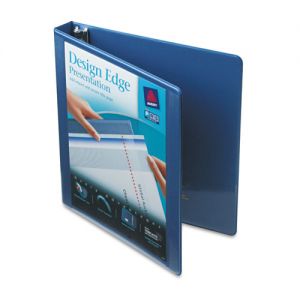
Presentations and reports have a completely different set of criteria. Presentation binders are all about combining affordability in large quantities with creating a positive impression even before it's opened, which means a clear cover to allow you to insert a title sheet and/or a spine insert. Binders are also available in a smaller capacity such as 1/2” rings. The tradeoff is that presentation binders are commonly built for short-term usage, meaning they aren't suited for storage or frequent reference.


Alternatives to traditional binders include flexible binders made of clear plastic and easel binders that fold into easels to add an instant visual element to your presentations. For help finding the perfect binder for you, this binder buying guide will help sort products by size and ring type.

Thursday, January 3, 2013

Having a Ball

Have you ever taken note of your posture throughout the workday? Maybe you start the day strong, fresh off your morning cup of coffee, upright and ready to produce. After several hours of that, plus a lunch break, you might spend the afternoon joining the rest of us- slouching in your chair, leaning back and doing your best to focus on your work instead of the clock.

We really shouldn't blame your chair for that. There are all sorts of other factors that could be involved there. Your chair, however, doesn't usually help. However, Safco has an interesting alternative that offers a comfortable sit while still demanding concentration and posture.


The Zenergy ball chair is a mesh-covered medicine ball that sits on a sturdy base and, despite its small footprint, is sized about the same as a normal chair. Without a back, it's up to you to stay upright. This isn't any more difficult than sitting on a bench, but it does require your body to sit properly. This keeps you more alert and more ready to work than when a back rest is supporting you.

I've been sitting in one all afternoon, and the mesh covering does make for a comfortable sit and it certainly improves concentration. The whole good posture thing and the occasional adjustments do require a period of acclimation: I recommend sitting in the chair for only a couple hours at a time, building up to full-time use over the course of a few days. It also feels a little higher than my previous chair and a bit over-inflated. The Zenergy does include a pump for making such adjustments, which I would totally do if it wasn't a demo that I had to share with the rest of the office.

The Zenergy does serve me well in particular, as I tend to be a bit fidgety at my desk, never quite content in one position. The ball allows for a bit of non-disruptive squirming, allowing me to focus on my work as the seat shifts on its own to adjust to my position. It's the same philosophy Safco takes with their Alpha-Better series of school desks that allow children to stand (or sit on optional stools) and fidget during class.


It's no surprise, then, that Safco also has a smaller ball chair, the Runtz series, designed for children. It sits about 6 inches shorter but has all the same features as the Zenergy.

Thursday, December 13, 2012

A Planner For 2013

We're all pretty pre-occupied with the holidays right about now, but don't forget that the new year is looming on the horizon. 2012 is just about in the books already, and that means you need to think about 2013. Once the ball drops, your life resumes as usual, and that means you'll still need to keep track of it. You don't want to flip your calendar on January 1 only to find a chipboard backing or a friendly reminder to buy a replacement. You need to be ready!


If you already have a planner and just need to refill it, consider this that friendly reminder in advance. Manufacturers stop making new appointment book refills for a given year soon after that year begins. It's important to make sure you're taken care of for 2013. For those looking for a new planner or calendar, there are several things to think about before purchasing.

The first thing to determine is whether you want a calendar, appointment book, or organizer. Calendars tend to be stationary, sitting on your desk or mounted to the wall. Appointment books and organizers are both designed to be carried around, with organizers including additional features like a zipper enclosure, address book, scratch pad, pocket, business card slot or even a calculator. Organizers are also more likely to be refillable than appointment books.

The next thing to think about is how detailed your schedule needs to be. If you plan your day in fifteen minute increments, or need to add additional information to hourly appointments, buy a daily appointment book or desk calendar. Weekly planners still allow some space to list daily appointments and are considerably less expensive. Monthly planners only give you a small box per day, but allow you to view a whole month at a time.

That's the third thing to consider: do you take things day by day or do you like to have the whole week or month in front of you? If you've opted for a calendar, going daily gives you the satisfaction of tearing off or turning a page every day, while a desk pad livens up a workstation, giving you space to plan every day while viewing an entire month at a time.